Commercial access control is the layer that decides who may enter which part of a building, when, and on what credential. In a typical office that means a controlled main entrance, controlled lifts or floor doors, and separately controlled server rooms, stores and HR or finance areas. The system is made up of readers at the door, controllers that hold the access rules, locking hardware, and management software that administers users and produces the audit trail. IDS supplies, installs, commissions and supports all four layers as one contract, so responsibility for a working system sits in one place.
The usual sites are offices and office parks, warehouses and distribution centres, factories, retail head offices, schools and colleges, clinics, and government buildings. The requirement is rarely just a locked door. Facilities managers want contractors on site only during agreed hours, staff restricted to the areas relevant to their role, an accurate record for an incident investigation, and a way to disable a leaver's access immediately across every door rather than chasing a card.
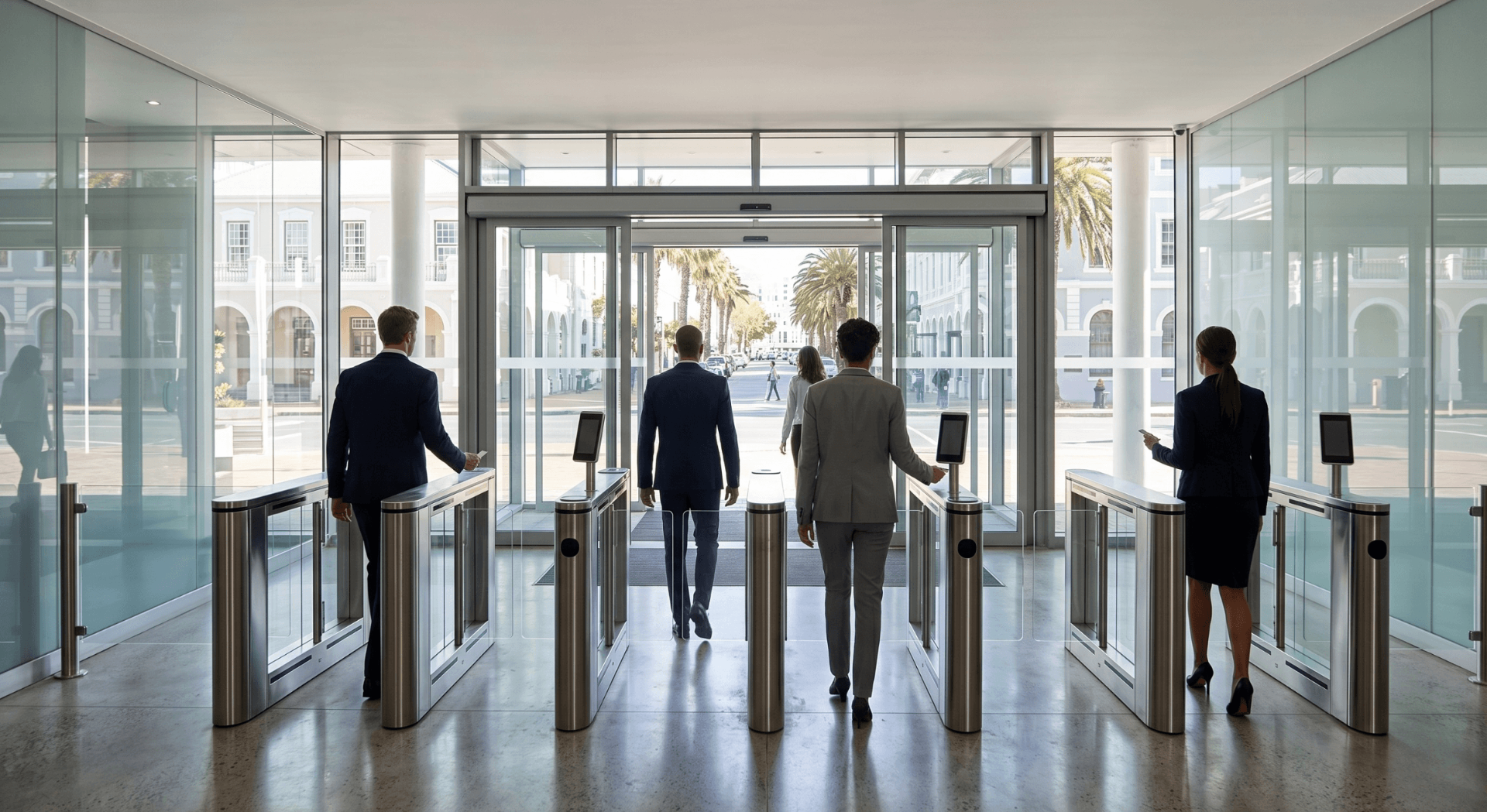
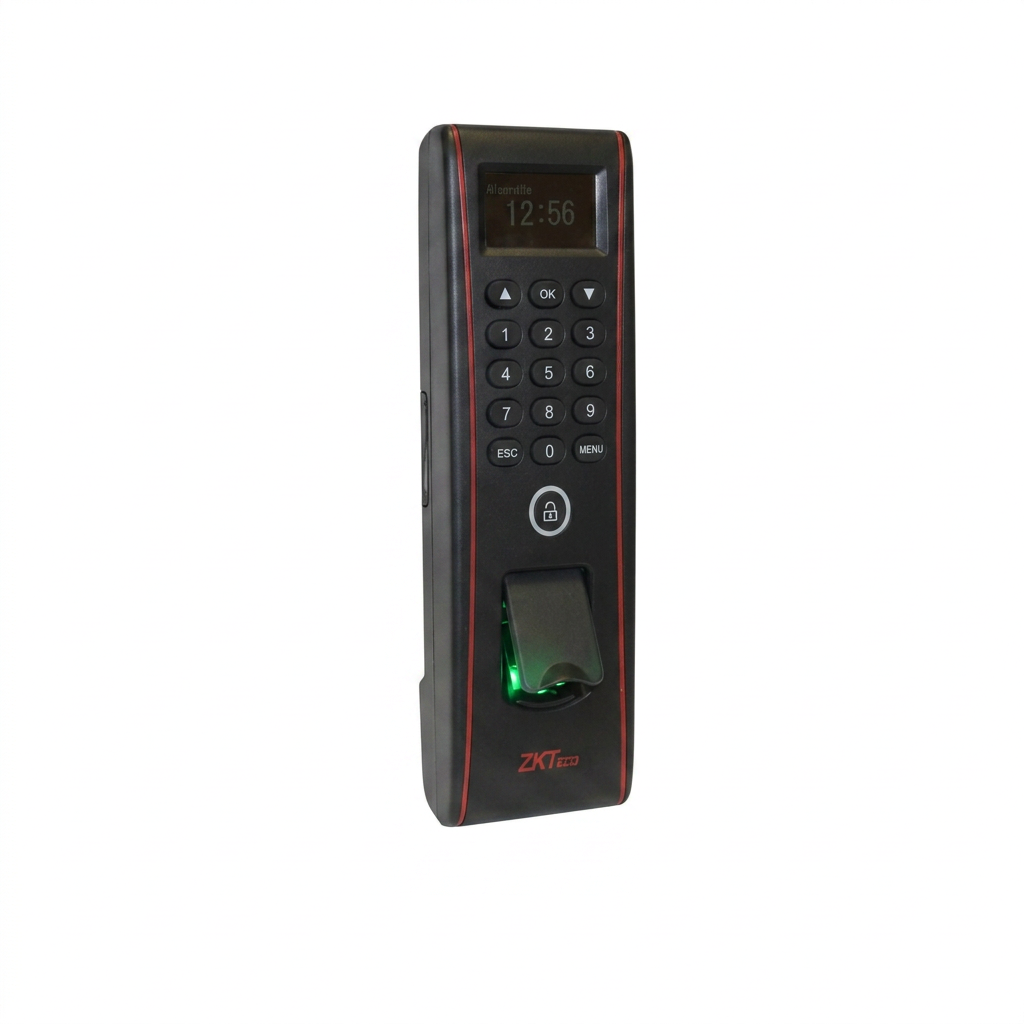
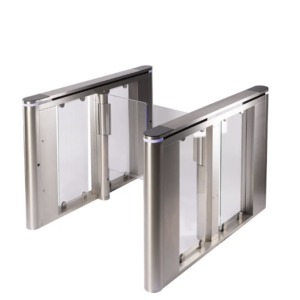
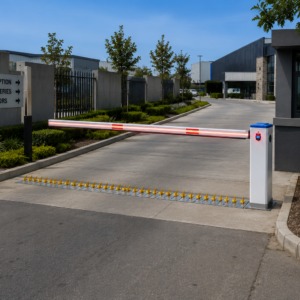
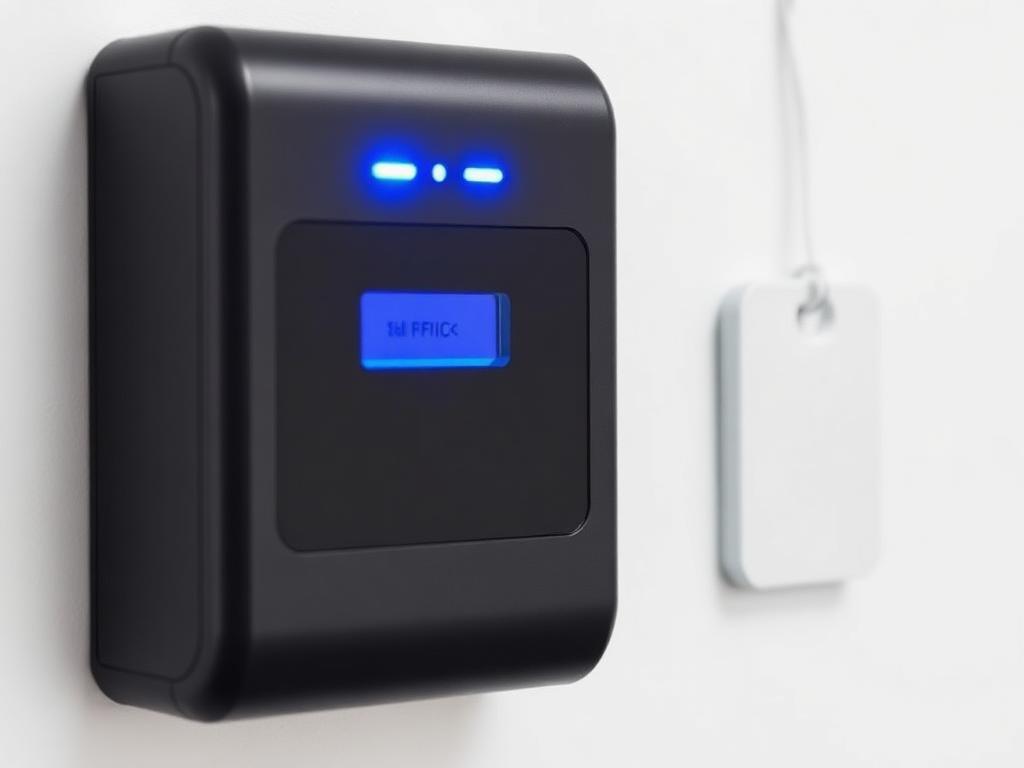
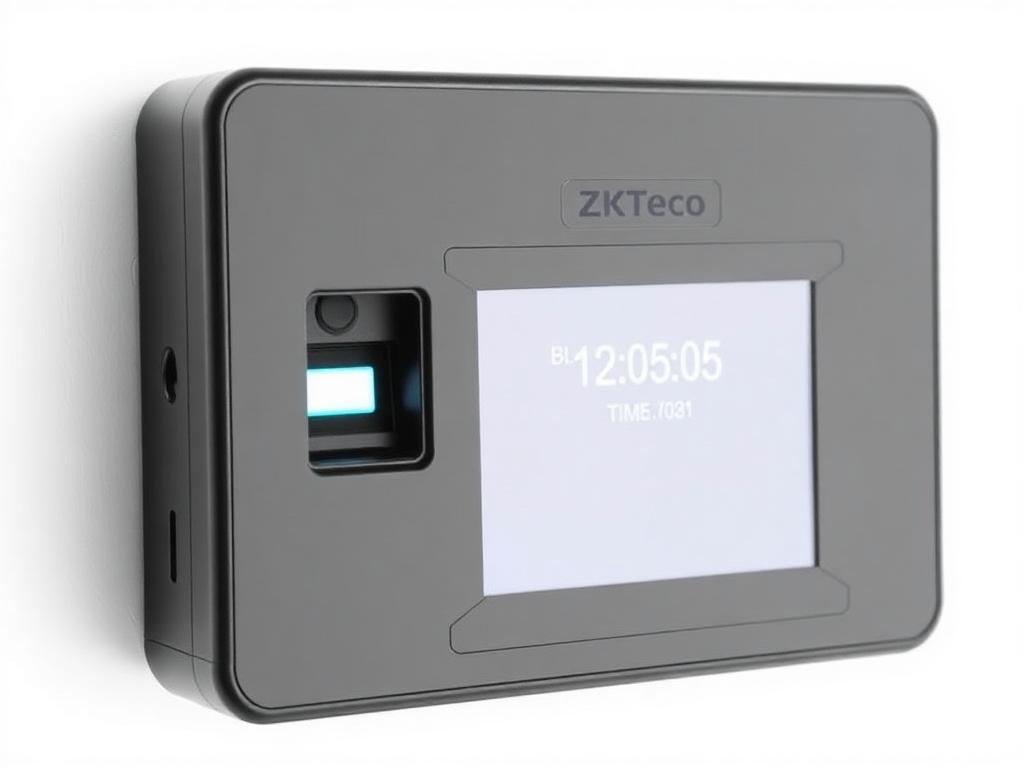
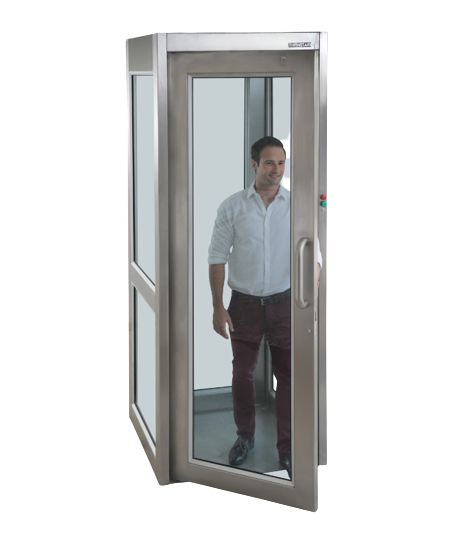
The product mix on a commercial site usually combines several categories. Biometric or card readers control internal doors. Speedgates or turnstiles handle the reception line where headcount and throughput matter. Boom gates and bollards control the parking entrance. Visitor management issues temporary credentials at reception that expire on their own. Because all of it can run off one database and one set of rules, a single person record governs the parking boom, the lobby lane and the office door.
What drives the price is the number of controlled entry points first and foremost, then the credential technology chosen, then how much cabling and civil work the building needs, then integration. A new-build with accessible ceiling voids and structured cabling is materially cheaper to fit than an occupied heritage building where cable routes have to be surface-trunked and work happens after hours. Integration with time and attendance, payroll, CCTV, lifts or an existing controller adds configuration effort. We quote per site after a walkthrough, listing hardware, labour and commissioning separately so it is clear what you are paying for.
Typical price range
Networked multi-door systems from R20,000; per-door hardware and install from R6,000
A networked commercial system with controllers, management software, cabling and commissioning generally starts around R20,000 and scales with the number of doors, lanes and gates. Reception speedgate lanes and vehicle barriers are quoted on top of the door count.