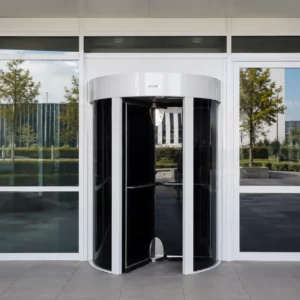
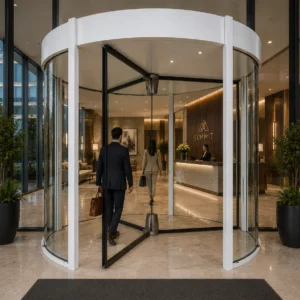
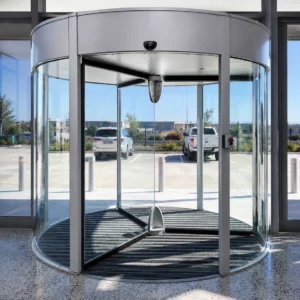
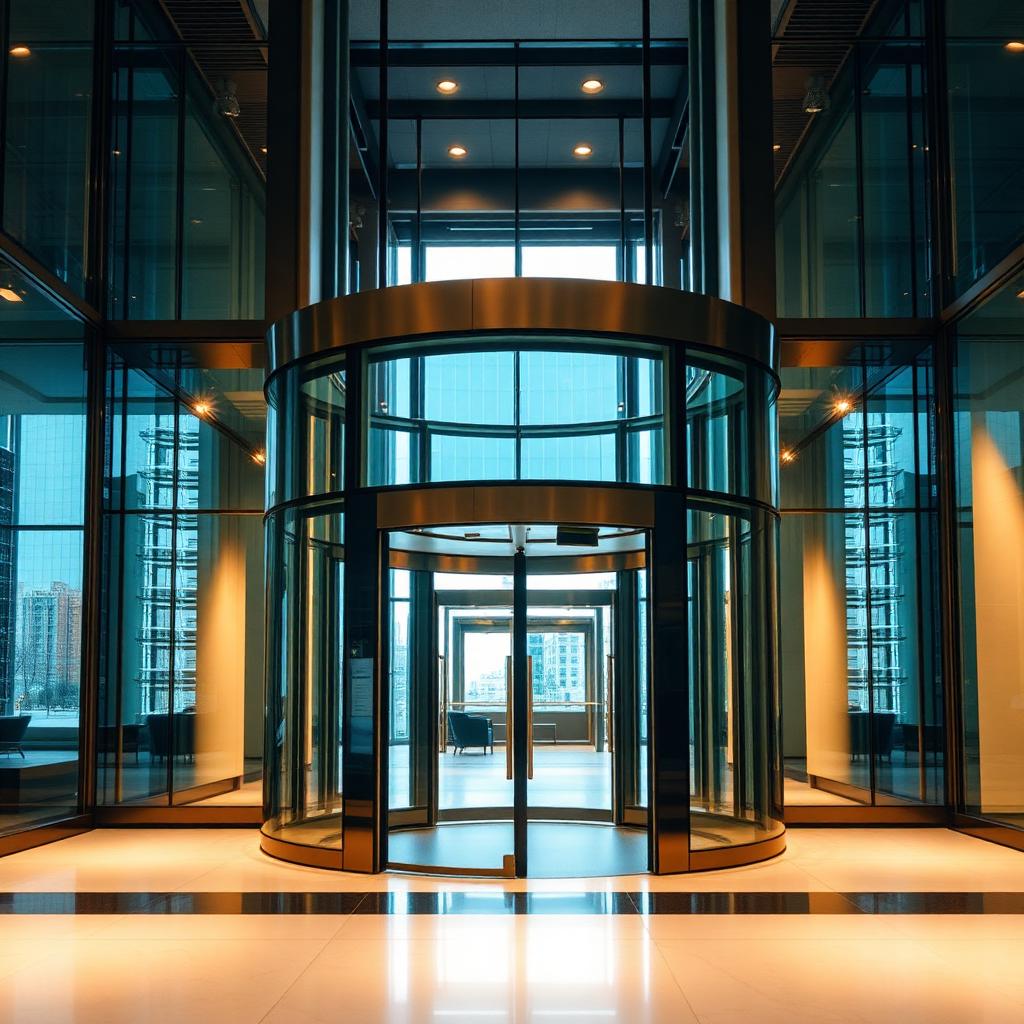
Premium glass revolving door at the entrance of a modern commercial building
Atlas Authorised Supplier

Atlas Revolving Doors South Africa — Security, Manual & Automatic Revolving Doors

Premium manual, security and automatic revolving door solutions designed to enhance access control, improve energy efficiency and create a professional entrance experience for commercial buildings.

Let us help you build your solution

No obligation · Atlas Authorised Supplier · 25+ Years in Business

★★★★★ Google Reviews 25+ Years In Business Atlas Authorised Supplier Manual, Security & Automatic Range Let us help you build your solution

Atlas Revolving Doors We Supply & Install

Every IDS Atlas revolving door installation includes:

  • Let us help you build your solution with a site & foyer assessment
  • Atlas manual, security and automatic door supply
  • Professional installation with civil and glazing coordination
  • Integration with access control and biometric readers
  • Commissioning, handover and operator training
  • After-sales service and maintenance contracts

"Our word is our guarantee. If we recommend it, we stand behind it — and we will not recommend something we cannot support."

— Donavan Driver, Director, IDS (Pty) Ltd

Where IDS Installs Atlas Revolving Doors

Corporate HQ & Office Towers

Hotels & Hospitality

Banks & Financial Buildings

Retail & Mixed-Use Developments

What Our Clients Say

"IDS made the integration of time and attendance management with access control features absolutely seamless. Saving us time and providing advanced security. Highly recommended!"

Johnathan S.

Small Business Owner

"Your recommendations made managing our workforce a breeze. The biometric access system is efficient and secure, and the comprehensive reporting helps us optimise staffing patterns."

Alex M.

Operations Director

"The best decision I made as a facility manager. User-friendly interface and customisable access levels improved security, and integration with our timekeeping software streamlined payroll."

Michael B.

Facility Manager

"Impressed! The biometric time and attendance features have put an end to buddy punching, and their exceptional customer service provided personalised solutions. Definitely recommended!"

Kevin T.

Warehouse Manager

Trusted by leading South African businesses

EngenAshton WineryPienaar Brothers3C MetalSpice MeccaAstron Energy

Why Businesses Choose IDS

Atlas Authorised Supplier

Direct supply, full warranty, factory-backed support. Not a reseller — an authorised supplier.

25+ Years In Business

Independent Dynamic Solutions has installed access and entrance systems across South Africa since 2000.

Supply AND Installation

One team, one guarantee. We supply what we install and install what we supply.

After-Sales Support

You call, we answer. Remote support and on-site returns for hardware faults.

Director-Backed Guarantee

Donavan Driver personally stands behind every recommendation we make.

Trusted by SA Businesses

Engen, Ashton Winery, Pienaar Brothers, 3C Metal, Spice Mecca and many more.

Frequently Asked Questions

Manual doors are pushed by the user and are the simplest option. Security doors add reinforced construction and anti-tailgating features. Automatic doors are motorised for hands-free entry with sensors for safety.

Planning a New Entrance for Your Building?

Let us help you build your solution. We specify the right Atlas manual, security or automatic revolving door, supply the unit and manage installation end to end.

Get Your Let us help you build your solution

We'll review your foyer and recommend the right Atlas revolving door. No obligation.

What do you need?

Atlas Security and Automatic Revolving Doors in South Africa

A revolving door is an entrance that is always closed. Because two or more leaves rotate inside a drum, there is never an open aperture between inside and outside, which is why revolving doors are used both for building climate control and for controlled entry. IDS supplies and installs the Atlas range — manual, automatic and security revolving doors, plus mantrap interlock booths — for commercial buildings across South Africa.

Manual revolving doors are pushed by the user and are the economical option for retail and hotel entrances where the main objective is stopping the constant draught and heat exchange of a swinging door. Automatic revolving doors turn under motor control with sensors that slow and stop the drum when someone hesitates or a trolley obstructs a leaf, and they suit corporate lobbies, hospitals and airports where accessibility and continuous flow matter.

Security revolving doors are the access control product. The drum is interlocked with a reader so it releases one quadrant per valid credential, which prevents tailgating without a guard standing at the entrance. Where the requirement is stricter — banking halls, data centres, cash centres, control rooms — a mantrap interlock booth holds the person between two interlocked doors until the credential and, if configured, a weight or single-occupancy sensor confirm one person only.

The choice is usually driven by three factors: the security level required, the throughput at peak, and the building's energy performance. Revolving doors reduce the heated or cooled air lost at the entrance compared with sliding or swing doors, which shows up in HVAC running costs on large lobbies. Throughput is a function of drum diameter and rotation speed, and accessibility requires either a wide drum or an adjacent DDA-compliant swing or sliding door, which we specify as part of the entrance rather than as an afterthought.

Price is driven by door type, drum diameter, number of leaves, glass and finish specification, reader integration and the building work at the opening. Structural opening preparation, floor levelling and power supply are commonly the difference between two otherwise identical quotes, so we survey the opening before pricing.

Typical price range

Project-specific — manual units are the entry point, with security revolving doors and mantrap booths quoted per opening

Revolving doors are priced per opening because drum diameter, leaf count, finish and structural preparation dominate the cost. We survey the opening and quote hardware, building work and commissioning separately.

Atlas Revolving Doors — frequently asked questions

What is the difference between a security revolving door and a mantrap?

A security revolving door releases one quadrant of the drum per valid credential, which stops casual tailgating while keeping people moving. A mantrap is an interlocked booth: the first door must close and the credential must be verified before the second door opens, and single-occupancy sensing can be added. Revolving doors are the choice for lobby throughput; mantraps are for the highest-security rooms where you accept slower entry. Both are driven by the same access control readers.

Do revolving doors meet accessibility requirements?

A revolving door on its own does not serve every user, so accessibility is handled either with a large-diameter drum that accepts a wheelchair, or with an adjacent automatic swing or sliding door on the same access control. Most commercial installations use the adjacent-door approach because it also handles trolleys, deliveries and prams. We specify the accessible route as part of the entrance design rather than leaving it to be retrofitted.

Do revolving doors actually save energy?

Yes, and it is the reason many large lobbies specify them. Because the drum is never fully open between inside and outside, the volume of heated or cooled air exchanged at the entrance is far lower than with a swing or sliding door. On a high-traffic lobby that reduces the HVAC load at the entrance meaningfully. The saving is most noticeable in buildings with tall lobbies and constant foot traffic.

What happens to a revolving door in a power failure or emergency?

Automatic and security revolving doors are fitted with a break-out or fail-safe function so the leaves can be pushed open to form a clear escape route. In a power failure an automatic door can be pushed manually, and emergency egress is never dependent on the motor. The specific arrangement is set at commissioning to match the building's fire strategy.